
A manta ray gliding slowly above the reef, a school of trevallies tightening in the blue, then the spectacular outline of Nusa Penida on the horizon: a Nusa Lembongan diving trip can offer some of the most striking memories of a diving holiday in Bali. But it is not a trip to choose based solely on a photo or the promise of mantas. Sea conditions, your experience and the way the day is organised all make a difference.
From Tulamben, this adventure is best planned as a true day of exploration. The aim is not to rush from one dive to the next, but to give you time to enjoy the journey, get your equipment ready without rushing and adapt the plan to the day’s sea conditions. For travellers who prefer an experience away from crowded outings, the private format naturally creates a different atmosphere.
Why choose a Nusa Lembongan diving trip?
Nusa Lembongan, Nusa Ceningan and Nusa Penida form a group of islands off Bali’s south-east coast. Underwater, their scenery contrasts with the black-sand sites and volcanic slopes of Tulamben. Here, the water is often bluer, the landscapes more open, and the influence of the currents brings abundant pelagic life.
The main attraction remains the manta ray. Cleaning stations around Penida regularly attract these majestic animals, sometimes alone and sometimes in groups. Seeing a manta is unlike a fleeting encounter: when it moves calmly through the current, it may stay long enough for you to observe its movements, markings and interaction with cleaner fish.
However, it is important to keep realistic expectations. Mantas are wild animals, and no encounter can be guaranteed. The season, swell, visibility and animal activity change from one day to the next. A responsible team does not sell artificial certainty: it selects the sites best suited to the conditions, while keeping your safety and enjoyment at the forefront.
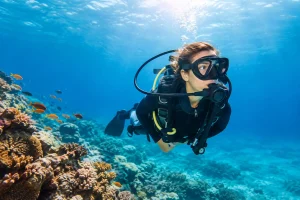
Lembongan also offers a wonderful variety of dives. Depending on the itinerary, you may move from a manta-focused site to a wall dive, a gentle drift dive or a reef rich with turtles, parrotfish, fusiliers and gorgonians. Between July and October, when the water cools, experienced divers may sometimes hope to encounter the rare mola mola. It is an exceptional bonus, not the sole reason to book a day trip.
Who is this day really suitable for?
A trip around Nusa Lembongan can suit certified divers of many levels, provided the chosen sites match their comfort level. A newly certified diver approaches the sea differently from a diver accustomed to drift dives or boat entries. This is precisely why the experience level declared when booking needs to be honest, without trying to impress.
Currents are part of the character of the Nusas. On some days, they are moderate and make for a pleasantly dynamic dive. On others, they can be stronger, variable or accompanied by cold-water upwellings. Visibility can also vary, especially during periods of swell. A good day is not one where you insist on visiting a famous site at all costs, but one where decisions made on site are adapted to reality.
For a complete beginner, a first sea-diving experience around Lembongan is not always the best starting point. It may be wiser to discover diving in calmer conditions, with a dedicated instructor, before considering exposed sites. Families and couples with different experience levels can also enjoy a more suitable programme when everyone receives individual attention rather than following the pace of a large group.
At Scuba Tribe, each booking has its own guide or instructor and is never combined with unrelated divers. This approach is especially valuable for a day in the Nusas: your briefing, entry pace and site choices can remain focused on your group, your questions and your comfort.
What a well-organised day includes
A manta trip requires more coordination than a dive just minutes from the resort. The journey, boat schedules, sea conditions and surface intervals need to form a realistic whole. Allow a full day, without scheduling dinner or an important transfer too early in the evening. You will enjoy the experience more if you are not watching the clock between dives.
The briefing also deserves your full attention. It should explain the planned dive profile, entry and exit procedures, signals, appropriate behaviour around mantas and what to do in a current. Even if you have done many dives, every area has its own operational practices. Asking a question before entering the water is always easier than improvising once submerged.
Having a private guide does not mean the rules become more relaxed. Rather, it means you have someone who knows your air consumption, comfort level and way of communicating. If you would like more time to frame a manta, feel nervous before a drift dive or would prefer to shorten a dive, the programme can be adjusted thoughtfully.
The right way to behave around mantas
Mantas deserve calm observation. Keep your distance, avoid positioning yourself in their path, and never chase an animal to get an image. A manta that returns to the cleaning station on its own offers a more beautiful, longer and more respectful encounter than any underwater chase.
Also maintain stable buoyancy and avoid holding onto the reef. At frequently visited sites, every action matters. An attentive diver protects the site, while also helping everyone else enjoy a more natural encounter.
How to prepare your equipment and energy
The organisation provides the essential dive equipment, but your personal comfort remains important. A suitable wetsuit is often welcome, especially when cooler upwellings are noticeable. If you are prone to seasickness, plan for it before departure with solutions suitable for your situation, and seek advice from a healthcare professional if necessary.
The evening before, choose a quiet night, stay hydrated and avoid excessive alcohol. A day on a boat is more enjoyable when you have slept well. Bring marine-friendly sun protection, a towel, dry clothes and a light layer for the journey back. Your dive logbook or proof of certification should also be easily accessible.
Underwater photographers are best advised to be modest with the equipment they bring. A large setup is wonderful when conditions are calm, but it requires greater control in current and can distract from buoyancy. For a first day in the Nusas, making the most of the encounter is often more worthwhile than returning with a hundred average images.
Choosing the right time, without seeking perfection
Diving is possible in Bali all year round, but the Nusas cannot be reduced to a single “best season”. Drier periods can bring good visibility, while cooler months sometimes offer the excitement associated with mola mola. However, the water can be noticeably colder and conditions more demanding. During the rainy season, the sea and access may vary, although very beautiful days remain possible.
The right time therefore depends on your priority. If you primarily dream of mantas, remain flexible about the exact site and accept that the weather will guide the programme. If you are looking for mola mola, come with experience, good comfort in the water and a willingness to dive in cooler conditions. If you simply want to discover the Nusas without pressure, choose a stay that leaves you room to postpone the trip if the sea requires it.
A Nusa Lembongan diving trip is best enjoyed when it remains an adventure, not a box to tick. Leave room for decisions based on the sea, listen to your guide and take your time underwater: this is often how the day becomes one of your most personal memories of Bali.


 FR
 DE
 NL
 EN
 ID
 JA
 KO
 ZH

